— ⌀ —
🜄 How to Choose the Right Digital Product for Your Brand
Most new digital product builders make a huge mistake before they set out to package their knowledge into a product.
They build the wrong product that solves the right problem.
In reality, you don’t even know if your audience wants you to teach them stuff or just get stuff done. And if you don’t think about it, it’ll end up hurting your brand in the long run… because you’ll build something that is misaligned with your brand, your service, and your business.
So today, I want to help you avoid walking down the wrong bet paralysis, and offer up a solution to streamline your decision-making.
Validate Intent for your digital product
People buy to make life lighter.
With digital products, that usually means one of two intents: learn a skill or reach an outcome.
Ask the Tuesday test: What should my buyer be able to do at 9:00 a.m. next Tuesday?
- If the answer sounds like a capability (“pitch better,” “design a funnel”), you’re in Skill territory—a Container.
- If the answer sounds like a destination (“publish a landing page,” “ship a welcome sequence”), you’re in Outcome territory—an Engine.
This one question dictates both what you build and the format you choose. Decide the intent first; everything else is packaging.
This gap also happens to be one of the few issues why Creators build the wrong type of info product.
I like to think of it as Skill vs. Outcome
Let me explain.
Skill vs Outcome Digital Products
Let me use BOOKS to make my point.
When you buy a non-fiction book from your favorite bookstore, what is the reason behind buying the book?
Apart from the sentimental reasons and maybe someone’s recommendation, there’s only 2 reasons
It is either:
- TO LEARN A SKILL
- TO REACH AN OUTCOME
Let me give you an example…
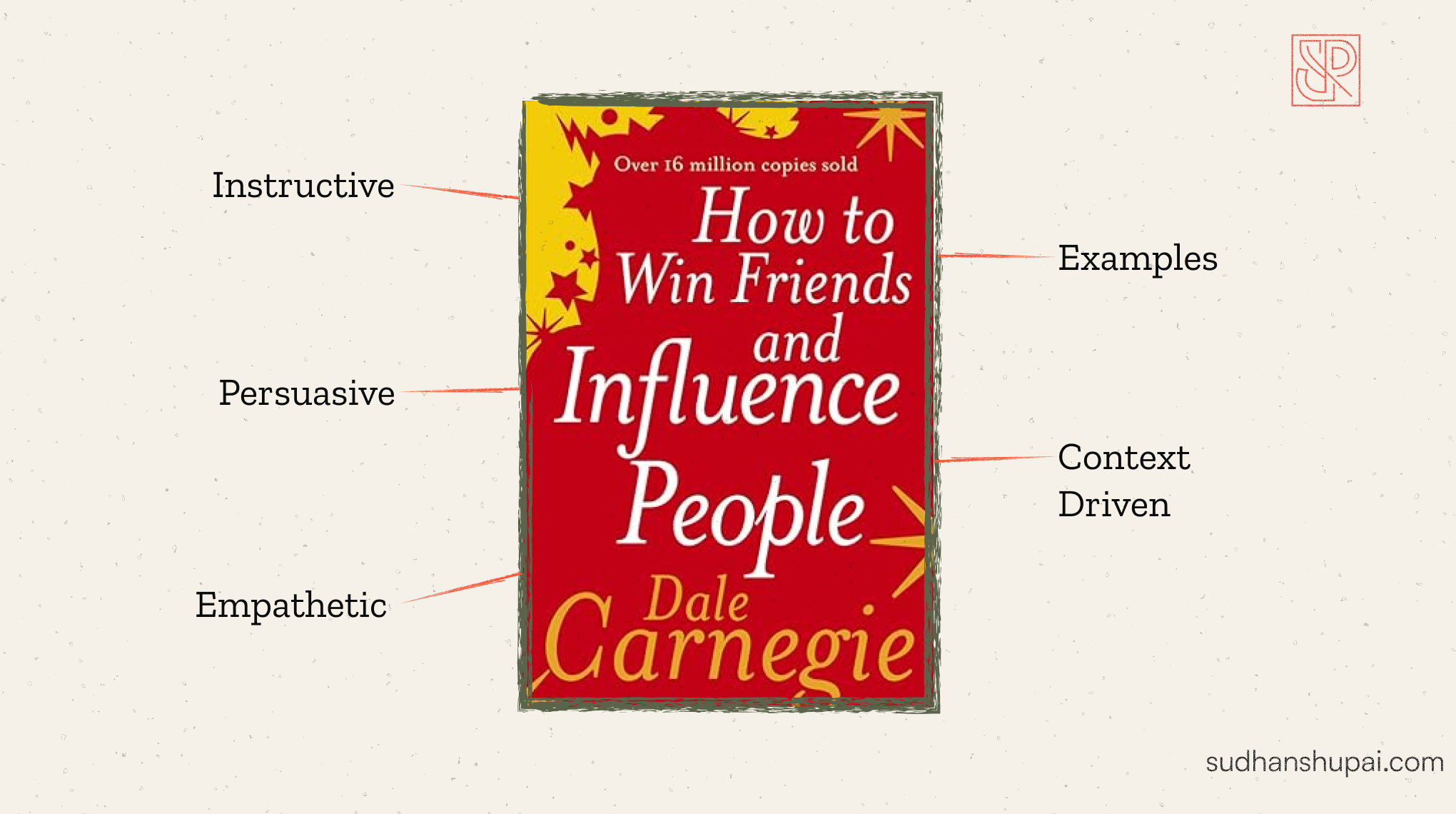
Everyone in the entrepreneur world knows ROBERT CIALDINI and “HOW TO WIN FRIENDS AND INFLUENCE PEOPLE”
That book has been a bestseller for a very long time.
The reason for that is simple, ou buy it to develop the ability to talk to other people, get better at sales or make friends (which is a huge thing for introverts like me)
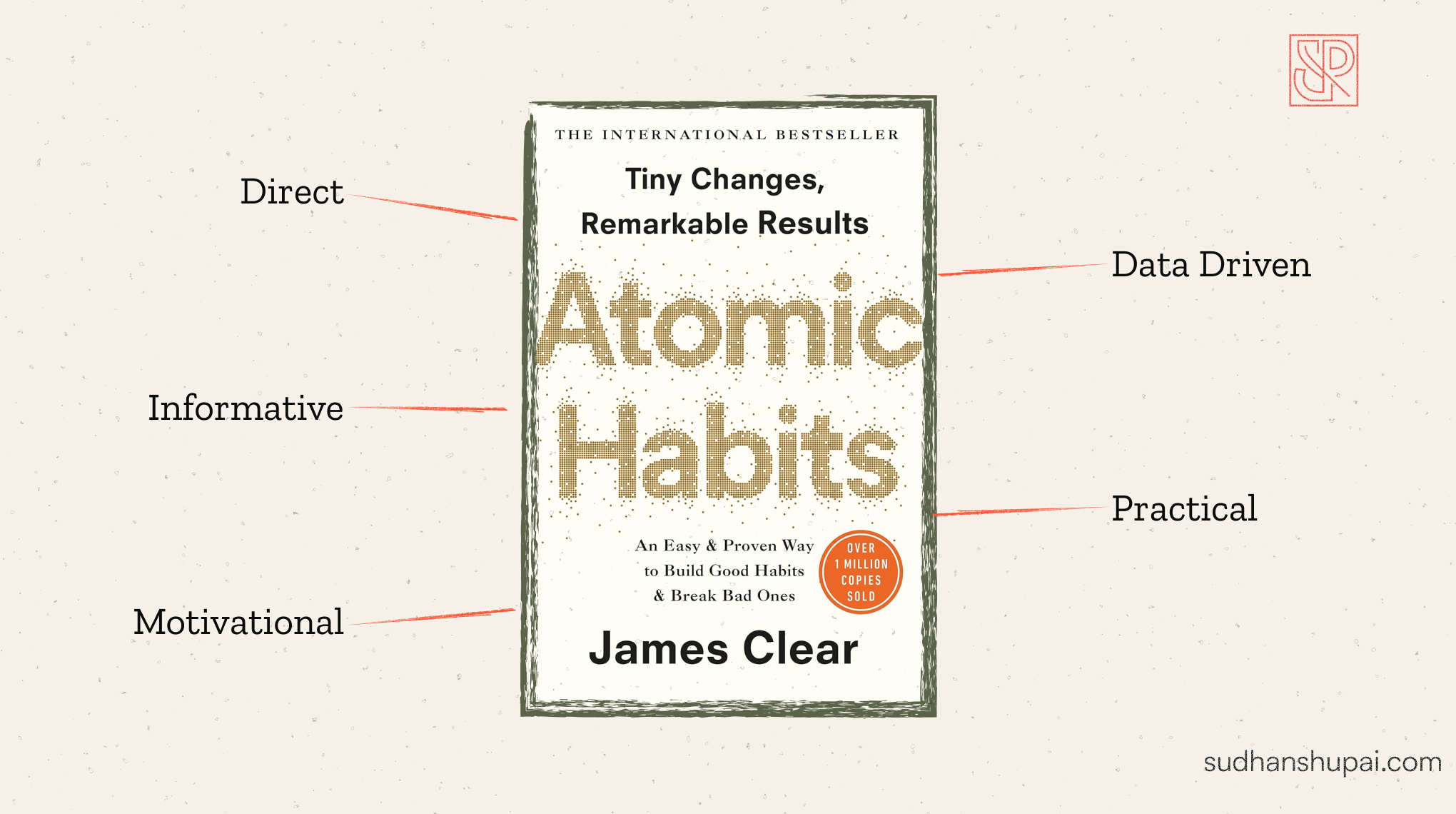
On the other hand, there is the new gen bestseller, “ATOMIC HABITS” by JAMES CLEAR.
This book has stood its ground as the go-to product if you wanna build healthy habits and routines easily.
It is heavy on Framework + mechanism.
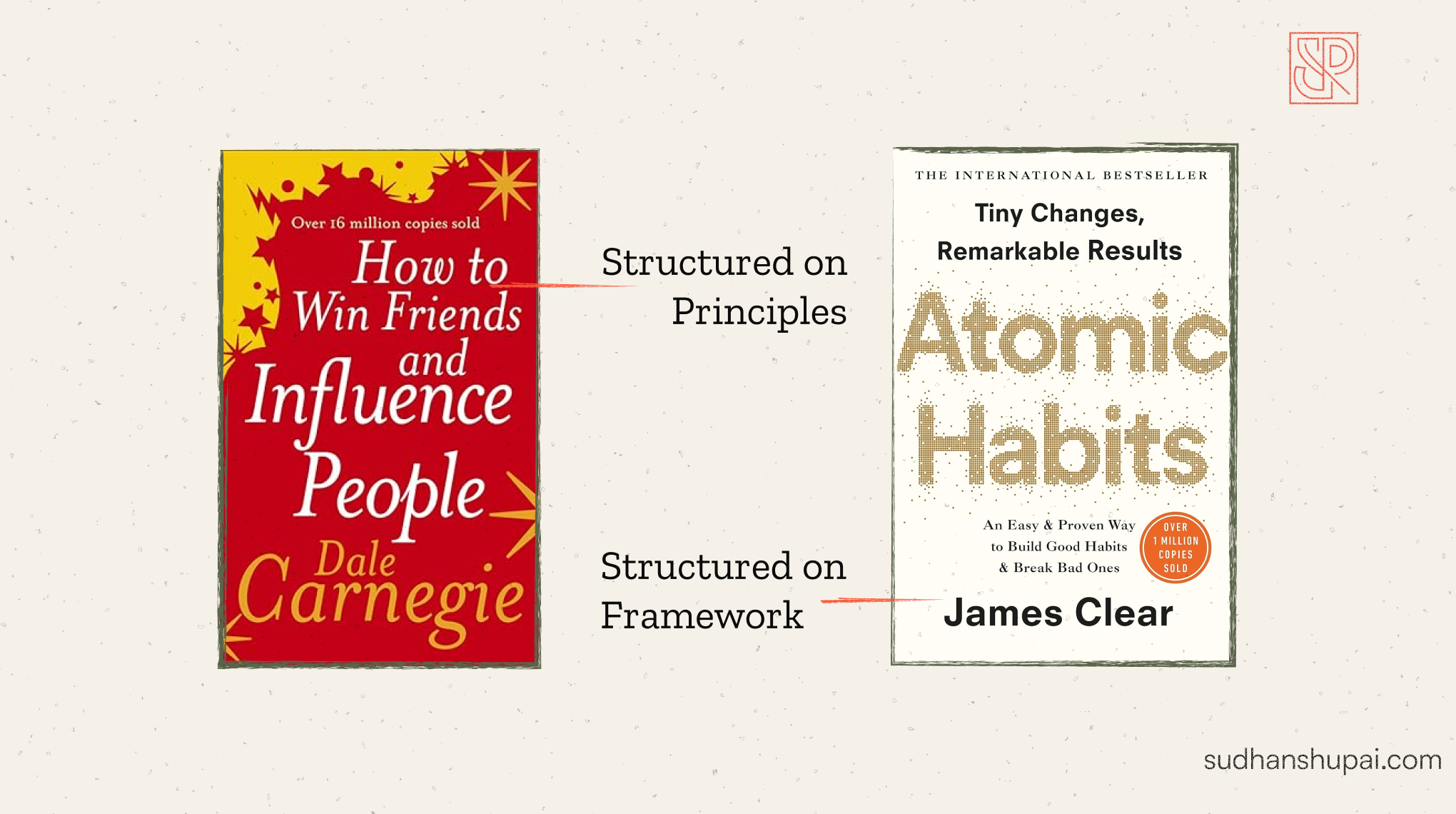
But the key difference between these 2 books is how they are structured.
How to Win Friends and Influence People teaches principles with scenarios. You buy it to develop the ability to relate, sell, and lead. Content + context.
Atomic Habits gives mechanisms—cues, routines, tracking—to change behavior quickly. You buy it to achieve consistent habits. Framework + mechanism.
The priority of info in these books makes them unique in their own categories.
Skill products are Container-like; Outcome products are Engine-like.
For both of these the vocabulariy of quality would change to something like
- Outcome Density (steps removed per unit time),
- Receipt-First Design (every step leaves a trace)
But what’s that got to do with products?
How can you leverage this
Every type of Digital product can be put into these categories too!
- Product for skill
- Product for outcome
You can choose the format of the product based on what your BUYER WANTS TO ACHIEVE.
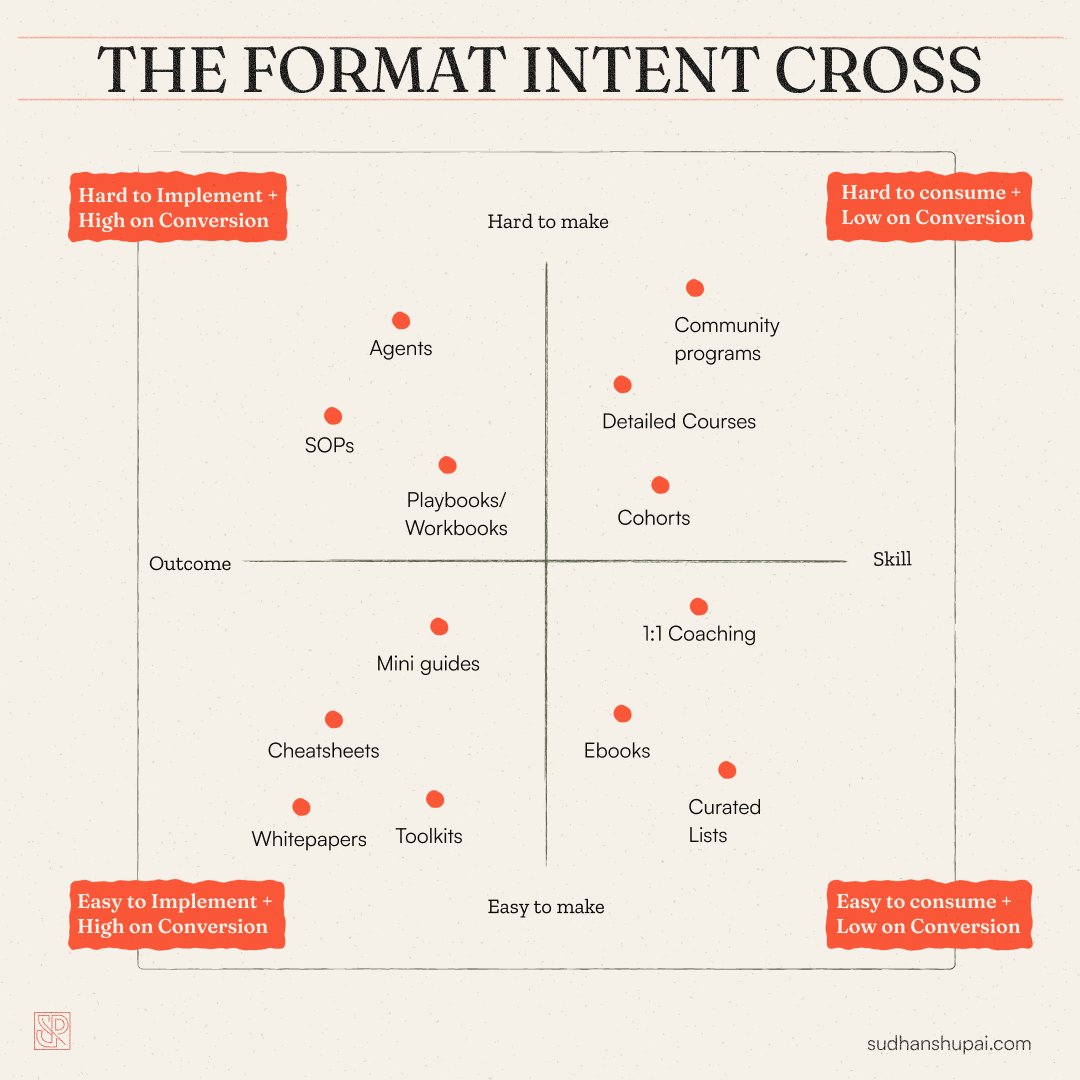
Some formats perform better to help someone achieve the outcome and some perform better for the skill side of the market.
For products that transfer skills, you’d typically see: Detailed courses, communities, 1:1 programs, e-books, cohorts etc.
On the other hand, products that transfer outcomes: short courses, guides, templates, workbooks, playbooks… anything that gives a general idea and asks you to fill the gaps with your data, to reach a specific quantifiable goal.
Skills don’t have an end in the learning journey (you can only pack in so much into a product, that’s why beginners guide to X get the traffic they do), but outcomes do.
Developing and managing all of these requires a different mindset – you have to think about structuring information, tools you will use, the psychology behind who is getting the info product… etc.
For a Quick, low-risk validation (no new-offer bloat):
- For a Skill idea, ship a 90-minute workshop + practice loop (prompt set + critique rubric). Look for measurable lifts in retained behaviors week over week.
- For an Outcome idea, ship a one-page checklist + template + mini-automation (trigger + form + output). Look for mini-cases and artifacts shipped within 48–72 hours.
Track Outcome Density and apply Receipt-First Design.
Align digital product with your business
The biggest mistake I see people make is to build stuff that isn’t aligned with their business. I did that in the past too.
If your business is email, brand, or copy, don’t ship “how to get your first client” just because you can. Build what fortifies your position.
What you build should align with your brand and business. Don’t just go on adding products just to sell and make money.
A good digital product should
- Strengthen your brand position (same lane, deeper moat)
- Generate automated income (repeatable purchase + delivery)
- Boost reputation over time (receipts, not vibes)
Map each candidate to your core service and audience level:
- Beginners respond to Skill products (clear progression, low stakes).
- Peers and busy operators respond to Outcome products (fast artifacts, low friction).
That keeps the brand mythos intact and creates a clean path from newsletter → sprint → flagship when you’re ready.
So you can convert them into bigger customers and recurring advocates.
Your Turn
After 5+ years in e-learning, the pattern holds:
- Skill transfer products
- Outcome transfer products
Your Digital product is often someone’s first paid touch with your brand. Don’t chase generic.
Choose the right kind of product for their intent, then keep it tight, provable, and systemized.
The result: resonance now, pricing power without scope creep later.
— ⌀ —
⌀ Prook Of Work
This week felt like a quiet reboot.
Not the dramatic kind — just me, confronting the echoes of old habits.
I realized I’ve been trying to build clarity before creating anything. That was the old bias.
But clarity doesn’t come first — it follows movement.
The LinkedIn post was the turning point. I was scared to publish it — too personal, too raw — but the response proved that honesty travels faster than polish.
The message landed because it wasn’t manicured. Something to remember.
I’ve also been rebuilding the YouTube strategy from scratch. Hard reset. No ego. Just learning founder marketing, one frame at a time.
Instagram still lags — but that’s fine. The slow work feels more sustainable.
Perplexity Comet changed how I think about AI. It’s not about faster output — it’s about cleaner thinking.
Fewer assumptions. More pattern recognition.
What broke: my illusion of control.
What shifted: my tolerance for unfinished things.
Next week’s question:
Can structure and spontaneity coexist inside a creator business — without one killing the other?
— ⌀ —
🜃 ICYMI: Filed Reports
Here are some newsletters and other pieces of content I enjoy and wanted to share with you:
- Matt Ragland’s W.R.A.P: What’s your unfair advantage—and are you using it? [WRAP 196]
- Andi Bitay’s Ditch the Template: Do Substack Leaderboards Even Matter Anymore?
- Kohi Social’s Reel on Founder Marketing: Founder Marketing SULT
— ⌀ —
🜔 Book to Read: The Diary of a CEO
Halfway through, and it’s exactly what I needed.
Not profound. Just obvious.
And that’s the genius.
It doesn’t tell you what to do — it reminds you how to think.
Less a roadmap, more a mirror.
It forces you to notice the ordinary patterns we overlook while chasing brilliance.
— ⌀ —
🝮 You’ve reached the end of this Dispatch.
[Closing Reflection Line]
✦ Want to share your forge? Reply and I’ll read every word.
⌀ Until next cycle —
Sudhanshu "Going Slightly Nuts" Pai.
PS - If you've gotten any value from this newsletter, I'd be honored if you'd leave a testimonial so others know this content is valuable.
Did someone forward this to you? Get the free invite here.